Introduction
Proper wheel alignment is essential for vehicle safety and smooth driving. Many drivers are often confused about the difference between front-end alignment and four-wheel alignment, unaware that each serves a different purpose.
Understanding the difference can save you costly repairs and improve your vehicle’s performance. Whether you drive a sedan, SUV, or truck, knowing which alignment is best for your car helps protect your suspension components. In this article, we explore the key differences between front-end alignment and four-wheel alignment and how each affects your vehicle.
What Is Front-End Alignment?
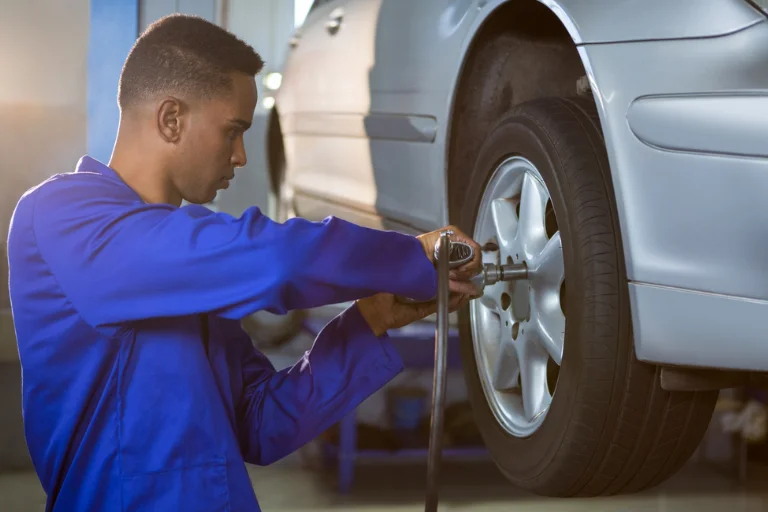
Front-end alignment focuses solely on adjusting the front wheels of a vehicle. This type of alignment is common in two-wheel-drive vehicles, especially front-wheel-drive cars. The process involves changing the toe and camber angles of the front tires to ensure they point straight and roll evenly.
According to studies, proper vehicle wheel alignment, including accurate inspection and adjustment of wheel angles, is essential. The camber angle affects steering control and stability. On the other hand, the toe angle impacts fuel efficiency, tire longevity, and overall driving comfort.
Benefits of front-end alignment include:
- Improved steering control and accuracy. This gives you smoother handling and better road stability in everyday driving.
- Reduced uneven tire wear on front tires. Your tires stay in better condition longer, saving you money on early replacements.
- Enhanced fuel efficiency due to less rolling resistance. With less drag on the wheels, your engine runs more smoothly and uses less fuel.
However, front-end alignment does not correct the rear wheel angles. If your vehicle’s rear wheels are misaligned, even a front-end adjustment may still cause uneven tyre wear and negatively affect handling. It’s most effective for vehicles without adjustable rear suspensions or older car models.
What Is Four-Wheel Alignment?
Unlike front-end alignment, four-wheel alignment adjusts both the front and rear wheels of a vehicle. This alignment type is necessary for all-wheel- or four-wheel-drive vehicles. All wheels must be precisely aligned to maintain stability and performance.
Key benefits of four-wheel alignment include:
- Corrects misalignment in all tires, front and rear. This ensures your vehicle drives straight and maintains proper tracking on all road surfaces.
- Ensures even tire wear across all wheels. Even wear helps extend tire life and prevents costly premature replacements.
- Protects vehicle components by reducing stress on shocks, struts, and control arms. This keeps your suspension system in better condition for longer.
- Improves handling, especially during cornering or on uneven roads. You experience smoother turns and safer control in all driving conditions.
Because four-wheel alignment involves more complex adjustments, it usually requires advanced machinery and professional technicians. Vehicles with modern suspensions or high-performance models typically benefit most from this service.
Key Differences Between Front-End Alignment and Four-Wheel Alignment
Understanding the differences between front-end alignment and four-wheel alignment can help you choose the service that’s best for your vehicle. Here are the main distinctions:
- Wheels Adjusted: Front-end alignment focuses only on the front wheels, while four-wheel alignment adjusts both front and rear wheels.
- Vehicle Type: Front-end alignment is ideal for two-wheel-drive vehicles, whereas four-wheel alignment is necessary for all-wheel or four-wheel-drive cars.
- Tire Wear: Front-end alignment primarily affects the front tires, but four-wheel alignment ensures even wear across all four tires.
- Cost: Front-end alignment is generally less expensive due to its simplicity; four-wheel alignment costs more because it involves more adjustments.
- Suspension Impact: Front-end alignment has minimal effect on suspension, while four-wheel alignment helps protect suspension components by reducing stress on shocks, struts, and control arms.
- Accuracy and Handling: Four-wheel alignment provides greater precision, better vehicle stability, and improved handling than front-end alignment.
Signs You Need Front-End Alignment

Even with regular driving, your vehicle may develop alignment issues. Watch for these signs:
- Uneven or rapid tire wear on the front tires. Misalignment causes the front tires to wear faster, reducing their lifespan and performance.
- Steering wheel pulling to one side. Your vehicle may drift while driving, making it harder to maintain a straight path.
- Vibrations or wobbling at higher speeds. Misaligned wheels can create shakes, affecting comfort and control.
- The steering wheel is not centred when driving straight. This indicates improper alignment and can lead to unsafe handling.
If any of these symptoms appear, a front-end alignment may restore proper handling and prevent further tire damage.
Signs You Need Four-Wheel Alignment

For vehicles with four-wheel drive or adjustable rear suspension, misalignment can affect all tyres. Look out for:
- Uneven wear on all four tires. Misalignment causes some tires to wear faster than others, reducing tire lifespan and performance.
- Vehicle drifting or pulling during turns. Your car may pull to one side, making driving less safe and more tiring.
- The steering wheel is off-centre even after previous adjustments. This indicates improper alignment and affects handling and control.
- Noisy suspension or unusual handling on uneven roads. Misalignment can stress suspension components, leading to rattles, vibrations, or unstable handling.
A professional four-wheel alignment addresses these issues by recalibrating both the front and rear wheels, protecting your vehicle components, and enhancing road performance.
Impact on Suspension Components
Proper alignment, whether front-end or four-wheel, reduces unnecessary stress on suspension components. Misaligned wheels force components like control arms, struts, and shocks to compensate for uneven forces, which can lead to premature wear or costly repairs. Regular alignment ensures these parts function optimally, improving ride quality and vehicle longevity.
Neglecting alignment may cause:
- Premature wear of suspension components. Misalignment puts extra stress on shocks, struts, and control arms, causing them to wear out faster.
- Steering difficulties and reduced control. Uneven alignment makes your vehicle harder to handle and can reduce safety, especially on curves.
- Increased fuel consumption due to rolling resistance. Misaligned wheels create more drag, forcing the engine to work harder and use more fuel.
By choosing the proper alignment method for your vehicle, you extend the life of both your tyres, saving money over time.
How Often Should You Get a Wheel Alignment?
Front-End Alignment: Every 12,000–15,000 miles or when signs of front tire misalignment appear.
Four-Wheel Alignment: Every 10,000–12,000 miles, especially for all-wheel-drive vehicles, after suspension repairs, or following accidents.
Regular checks during routine maintenance help catch alignment issues early, protecting your tires, suspension components, and overall driving safety.
Conclusion
Understanding the difference between front-end alignment and four-wheel alignment is essential for maintaining vehicle performance and safety. Front-end alignment is ideal for two-wheel-drive vehicles.
Four-wheel alignment is necessary for modern all-wheel-drive vehicles to protect suspension components. Don’t wait for uneven tire wear or steering issues to take action. Schedule your alignment service with Guerrero Mobile Mechanics today. Their certified technicians provide precise front-end alignment and four-wheel alignment solutions, conveniently delivered to your doorstep for a smoother drive.