Introduction
A worn belt can turn a normal drive into an unexpected breakdown, especially when the alternator, power steering, cooling system, or engine timing depends on it. Understanding serpentine belt replacement cost helps you plan repairs before a small crack becomes a roadside problem. The timing belt cost can also vary significantly depending on the vehicle and labor involved.
In this article, we explore what each belt does, current replacement prices, warning signs, and the factors that change repair costs so you can understand the issue before approving any repair.
What Are Serpentine and Timing Belts?
Although both are engine belts, they handle different jobs and require different repair procedures.
What Is a Serpentine Belt?
A serpentine belt is a long external belt that drives several engine accessories:
- Alternator: Keeps the battery charged while the engine runs.
- Air-Conditioning Compressor: Powers cabin cooling.
- Power-Steering Pump: Provides hydraulic steering assistance on applicable vehicles.
- Water Pump: On some engines, helps circulate coolant.
Because it is usually easier to access, serpentine belt replacement cost is generally less than deeper engine-belt service. The serpentine belt cost also varies with belt quality, engine layout, and tensioner condition.
What Is a Timing Belt?
A timing belt sits deeper inside the engine and synchronizes the crankshaft and camshaft so the valves and pistons move at the correct time.
- Engine Synchronization: Keeps internal engine movement properly timed.
- Valve Control: Helps valves open and close at the correct moment.
- Engine Protection: A broken belt can cause serious internal damage on some interference engines.
Average Serpentine Belt and Timing Belt Replacement Cost
Replacement prices differ significantly because a serpentine belt is usually easier to access, while timing-belt service requires more engine disassembly. This difference is one of the main reasons serpentine belt replacement cost is typically much lower than timing-belt service.
Serpentine Belt Replacement Range
The average serpentine belt replacement cost is about $154 to $212, including roughly $65–$82 for parts and $89–$130 for labor. Vehicle design, location, and related repairs can change the final price.
Timing Belt Replacement Range
The average timing belt replacement cost is much higher, typically around $409 to $919, according to national repair-cost estimates. The added expense mainly comes from longer labor time and the need to access components deeper inside the engine.
According to Spherical Insights & Consulting, the worldwide automotive timing belt market is projected to reach $10.61 billion by 2033, reflecting continued demand for timing-system components across passenger and commercial vehicles.
Parts, Labor, and Related Components
The serpentine belt cost itself may be relatively low, but worn tensioners, idler pulleys, or difficult access can increase the total serpentine belt replacement cost. Timing-belt service may also include a water pump, tensioners, seals, or pulleys, further increasing the final repair bill.
Timing-Belt Service Compared With Serpentine-Belt Service
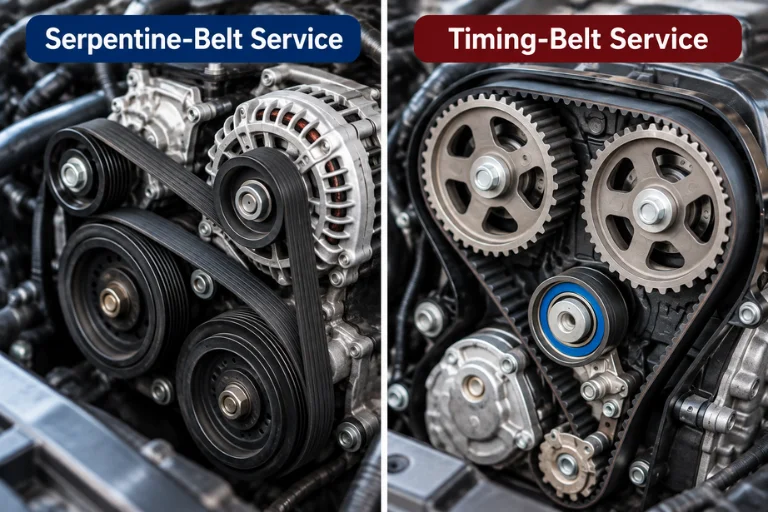
Timing-belt replacement usually costs much more because the repair requires deeper engine access and precise reassembly.
Why Timing-Belt Service Costs More
Average timing belt replacement cost can run around $918 to $1,338, depending on vehicle design and labor requirements. Technicians may need to remove covers, mounts, pulleys, and other components before reaching the belt.
Common items replaced during the same service may include:
- Tensioners: Maintain correct belt tension.
- Pulleys: Guide the belt and keep it aligned.
- Water Pump: Often shares the same labor-intensive access area.
- Seals: May be replaced if leakage appears during disassembly.
That is why serpentine belt replacement cost is not a useful benchmark for timing-belt work. A serpentine belt is usually external and easier to reach, while a timing belt requires more labor and exact engine alignment.
Why Separate Estimates Matter
If a shop recommends both services, request separate parts-and-labor estimates. This lets you see which components are included, whether preventive parts are being replaced, and why serpentine belt replacement costs so much less than deeper timing-system service. A clear estimate also helps you avoid paying overlapping labor charges when related work can reasonably be completed during the same repair.
Before approving either job, confirm whether the recommendation is based on visible wear, mileage, manufacturer service intervals, or a failed component. That context makes the quoted serpentine belt replacement cost easier to evaluate rather than comparing two repairs that involve very different amounts of labor.
Signs Your Serpentine or Timing Belt Is Failing
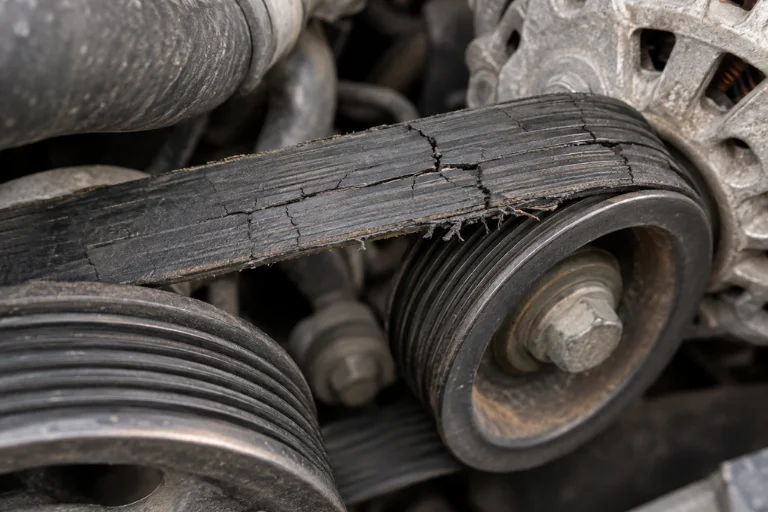
Warning signs vary because one belt drives accessories while the other controls engine timing. A proper inspection helps confirm whether the belt, pulley, tensioner, or another component is responsible before you pay serpentine belt replacement cost.
Serpentine Belt Warning Signs
- Squealing or Chirping: Noise from the front of the engine can indicate slipping, wear, or pulley trouble.
- Visible Cracks: Cracks across the ribs show age and deterioration.
- Fraying: Loose fibers or damaged edges suggest the belt is weakening.
- Glazed Surface: A shiny, hardened appearance can indicate slipping.
- Battery Warning Light: A slipping belt may stop the alternator from charging correctly.
- Heavy Steering: Hydraulic power steering may become harder to use if the belt stops driving the pump.
- Overheating: Vehicles with a belt-driven water pump may run hot if the belt fails.
Timing Belt Warning Signs
- Ticking Noise: Unusual engine noise can point to a timing-system problem.
- Rough Running: Incorrect timing may affect engine smoothness.
- Misfires: Poor synchronization can interfere with combustion.
- Hard Starting: The engine may struggle to start if timing is affected.
- Oil Near the Timing Cover: Leakage can contaminate belt material.
- Sudden Engine Shutdown: A broken belt can stop the engine immediately.
- No Restart: After complete belt failure, the engine may crank without starting.
Because timing belts can fail with little warning, scheduled replacement is safer than waiting for symptoms. In severe cases, the timing belt cost may be minor compared with internal engine damage, while regular inspections can also help keep serpentine belt replacement cost from rising due to related pulley or tensioner problems.
Factors That Affect Serpentine and Timing Belt Replacement Cost
Several factors can change both serpentine belt replacement cost and timing belt replacement cost, although timing-belt service is usually more labor-intensive.
- Vehicle Make and Model: Engine design affects part prices, belt location, and the amount of disassembly required.
- Labor Time: Serpentine belts are often easier to reach, while timing belts may require removing covers, mounts, pulleys, and other components.
- Part Quality: OEM parts generally cost more than aftermarket options, but you should also consider quality, warranty, and fit.
- Tensioners and Pulleys: Worn tensioners, idler pulleys, or guide pulleys can increase the total repair bill.
- Water Pump Replacement: Timing-belt service may include a water pump when both components share the same access area.
- Fluid Leaks: Oil or coolant contamination can shorten belt life and require additional repairs.
- Local Labor Rates: Dealerships, independent shops, and mobile mechanics may charge different hourly rates.
- Maintenance History: Delayed maintenance can increase component wear and repair costs.
Belt Replacement Options and Service Considerations
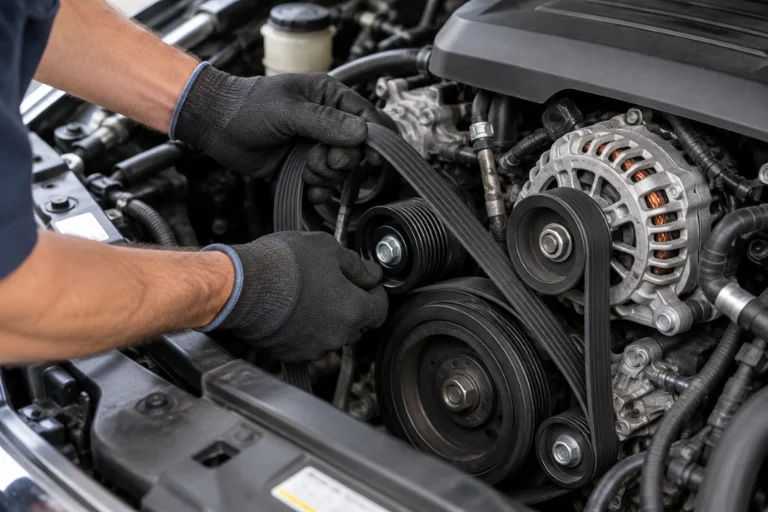
The right replacement option depends on the belt’s condition, vehicle design, repair urgency, and service availability. Some belt jobs are straightforward, while others require more time and access to related engine components.
Common service options include:
- Mobile Belt Service: Useful for routine inspections, serpentine belt replacement, and some scheduled maintenance performed at the vehicle’s location.
- Repair Shop Service: A practical option when the repair requires specialized equipment, additional disassembly, or replacement of related components.
- Preventive Replacement: Replacing a worn belt before it fails can reduce the risk of breakdowns and unexpected repair expenses.
- Related Component Inspection: Check tensioners, pulleys, water pumps, and surrounding components when appropriate.
- Written Repair Estimate: Ask for separate parts and labor charges before approving the work.
Comparing service options and confirming the required repair can help keep serpentine belt replacement cost predictable while ensuring the belt system receives the attention it needs.
Conclusion
Knowing how each belt works makes repair decisions easier and helps prevent a minor wear issue from becoming a breakdown. Average serpentine belt replacement cost is usually lower than timing belt cost, but vehicle design, labor, part quality, and related components still affect the final bill and budget. Compare the estimate with the condition of the complete belt system before approving work. Guerrero Mobile Mechanics can inspect the drive system, explain the serpentine belt replacement cost, and recommend only the repairs your vehicle actually needs.